Whether you’re a contractor managing a live site, or a homeowner planning a refurb, choosing the right timber can make a big difference to the cost, timeline, and finished quality of your project.
For the best results, it’s important you match the most suitable timber to the job – keeping in mind important aspects such as strength, moisture exposure, finish requirements, and how it will be used on site.
Over the course of more than 30 years, we’ve gained unrivalled experience in supplying timber and sheet materials to projects ranging from local builds to major national infrastructure projects.
This knowledge enables us to not only sell the very best quality timber, but help every customer and client specify exactly what they need.
We hope you find the guide below helpful to choose the right timber for your construction project. But if you are still unsure, please contact our dedicated sales team who will talk through your project and recommend the best options quickly and clearly.
Start with the application: What is the timber actually doing?
Before you pick a size or grade, identify how the timber will be used. Consider the following questions:
- Is it structural (load-bearing) or non-structural?
- Will it be internal or external?
- Does it need to resist moisture, wear, or repeated use?
- Is the priority strength, appearance, cost, or availability?
This simple checklist avoids the most common issue we see: choosing a timber product based on price alone and then having to replace it later on, or re-ordering mid-job.

Structural timber grades: C16 vs C24 (and why it matters)
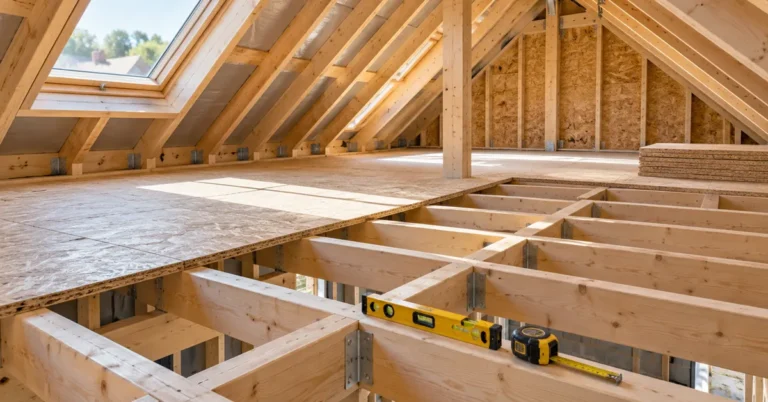
For framing, studwork, and joists, strength grading is key – most construction projects will specify C16 or C24 timber. In general terms:
- C16 is widely used for standard structural applications
- C24 offers higher strength performance and is often preferred when spans are longer or loads are greater
At South London Timber, we supply expertly kiln-dried, graded carcassing timber (both C16 and C24 graded) in a wide range of sizes, with joist and stud sizes planed all round.
If your project requires something specific – whether it’s longer lengths, larger sections, or consistent supply across phases – our team can advise and source accordingly directly from our mill in Germany.
Treated vs untreated timber: When protection is essential
If timber is exposed to the elements or used in higher-risk environments, its treatment can be vital:
- Internal, dry environments may not require treatment
- External or moisture-prone areas often do
- Ground contact or high exposure typically needs stronger protection and correct specification
We can advise on the best solution and, where appropriate, supply treated timber options. This includes modern, more environmentally friendly treatments such as Tanalith E.
It is critically important you get this right from the start, because treatment isn’t something you want to discover you actually need after installation.

Softwood vs hardwood: What’s the difference in construction?
Most structural framing is softwood, as it is cost-effective, widely available, and suited to load-bearing applications when correctly graded.
On the other hand, hardwoods are often chosen when:
- Durability and wear resistance are important
- A denser timber is required
- You need a premium finish or specialist performance
If you’re not sure what’s best for your project, don’t worry. Get in touch, tell us the application, and we’ll recommend the most suitable option, including availability and pricing.
Sheet materials: How to choose the right board for the job
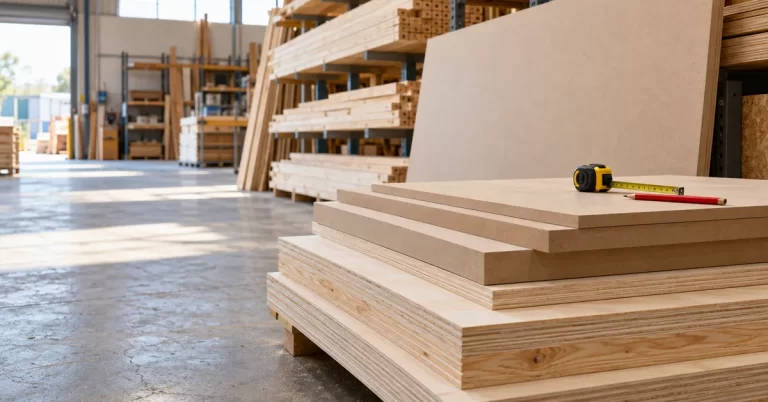
Many projects rely on sheet materials for flooring, roofing, hoardings, protection, and formwork. But choosing the “right” sheet depends on what you need it to do.
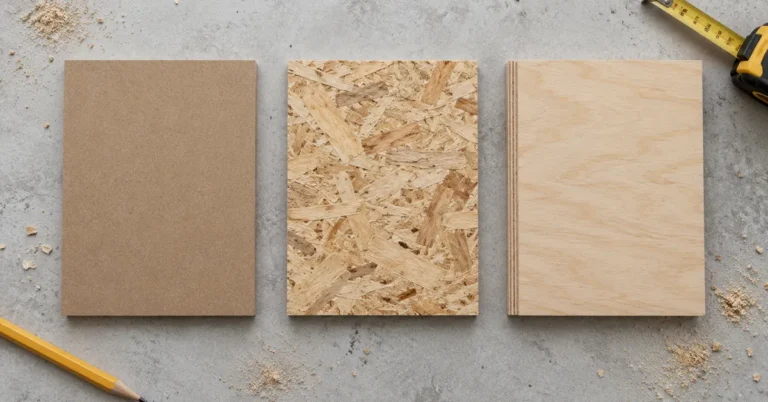
Here’s a quick, practical guide to help you select the right wood for the job:
Plywood (general construction)
A versatile option for structural and non-structural uses. Ideal where strength and stability matter. Different faces and grades suit different environments.
Marine plywood
A durable panel built for moisture resistance and external conditions. Commonly used where weather exposure is expected.
OSB3
A strong, cost-effective board used widely for internal and external applications, including roofing and flooring in construction environments.
MDF (including moisture resistant MDF)
Best suited to interior applications, joinery, and where a smooth finish is needed. Moisture resistant (MR) MDF is useful in areas with higher humidity.
Hardboard
A practical, economical board used for general construction and floor covering tasks.
You can find out more about all the different wood options available to you by visiting our product directory.
If you tell our team what the wood is for – whether it’s flooring, roofing, lining, protection, or joinery – we’ll steer you to the right option quickly.

Formwork and shuttering: Strength, finish, and reusability
For concrete work, material choice affects finish quality and cost per pour. If you’re doing formwork, your priorities often include:
- Panel strength
- Surface finish
- Number of reuses
- Reliability of supply
South London Timber supplies a range of formwork timber and formwork plywood options, including specialist panels designed to deliver consistent finishes.
If you’re working on a programme with repeated pours, we can help you select the best-performing system for your budget and required finish.
Why South London Timber makes specifying timber simpler
Timber selection can get complicated, especially when a project includes multiple phases, trades, and tight delivery windows.
That’s why so many customers prefer to work with an independent timber merchant that can expertly handle all the details with specialist knowledge.
When working with South London Timber, you get:
- Expert advice from a dedicated sales team
- Account-managed service – a direct contact who understands your ongoing requirements
- A wide product range across timber and sheet materials
- Proven experience in supporting major construction and infrastructure projects
- Reliable delivery across London and Kent, plus wider UK delivery options for qualifying orders where logistics and volumes make it practical
In short, we help you avoid product mismatches, reduce delays, and keep materials flowing when it matters most.
Speak to our team and we’ll help you choose with confidence
If you’re planning a project and want to make sure you’re choosing the right timber, we’re here to help.
Whether you’re buying a small quantity for a home improvement job or coordinating a multi-phase trade order, our team will answer questions, recommend the best options, and arrange delivery to suit your schedule.
Contact us today:
- Call: 020 7252 8383
- Email: sales@sltimber.co.uk
- Complete the form on our Contact Us page