Pop into our timber yard – or any timber merchant – and ask for “a sheet of ply” or “a board of OSB” and you’ll usually get exactly what you asked for.
But the trouble is knowing which one you actually need for your project.
MDF, OSB3 and plywood get lumped together as sheet materials, but they’re built differently, priced differently, and suited to different jobs.
Get the wrong one for what you are building and at best you’re paying over the odds for performance you don’t need; at worst, you’re re-ordering once it’s already been cut and fixed.
This guide explains how to tell them apart and how to pick the right one for what you’re building.
What’s the difference between MDF, OSB and plywood?
All three are engineered sheet materials made from wood, but they’re built in different ways. It is this which determines where each one belongs on a job.
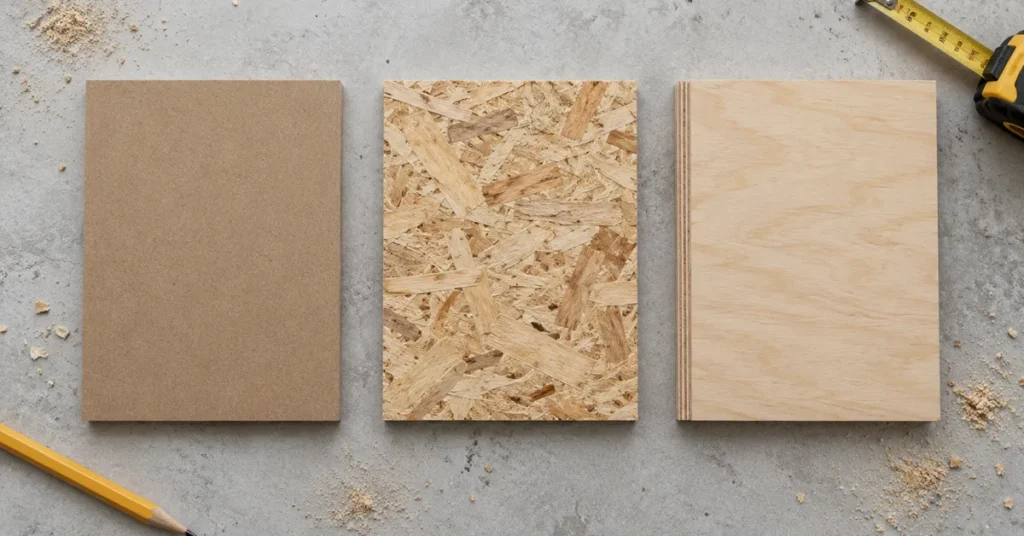
- MDF (medium-density fibreboard) is made from fine wood fibres bonded under heat and pressure, giving it a smooth, uniform surface with no visible grain.
- OSB (oriented strand board) is made from larger wood strands layered and pressed in different directions for strength.
- Plywood is built from thin layers, or “plies,” of real wood veneer glued together at alternating angles, which is what gives it its strength and stability across the sheet.
Essentially, MDF is about finish, OSB is about structural strength at a lower cost, and plywood sits in between – strong, versatile, and available in grades suited to almost any application from general construction through to boat-building.
MDF – best uses and limitations
MDF’s main strength is its smooth, consistent surface, which makes it the go-to choice for anything that needs a clean paint or veneer finish – such as fitted furniture, cabinetry, shelving, skirting and internal joinery.
We stock green moisture-resistant (MR) MDF as standard, which holds up better than standard MDF in damp internal environments like kitchens and bathrooms, and can also be used externally.
Standard MDF can be sourced quickly if your job calls for it.
Limitations: MDF is heavier than plywood for its thickness and isn’t a structural material. It’s not designed to bear structural loads the way OSB3 or plywood can. It also blunts cutting tools faster than solid timber, so factor that into tooling if you’re cutting a lot of it.
Our MDF comes in 8×4 sheets (2440×1220mm), in thicknesses from 6mm up to 25mm.
OSB3 – best uses and limitations
OSB3 is the workhorse structural board of the three.
It’s a multi-purpose panel used for both internal and external applications – most commonly flooring, roof sheathing, wall bracing and site hoarding – anywhere you need a strong, cost-effective board that can handle some exposure to the elements during construction.
Limitations: OSB3 doesn’t offer the smooth, paint-ready finish of MDF or the more refined appearance of plywood, so it’s rarely the right choice where the surface will be seen in the finished job. It’s a structural and protective material first, not a decorative one.
Our OSB3 comes in 8×4 sheets (2440×1220mm), in 11mm and 18mm thicknesses.
Plywood – best uses and limitations
Plywood is the most versatile of the three, largely because “plywood” actually covers a range of different grades built for different jobs.
We stock both hardwood and softwood varieties, including Far Eastern hardwood and Chilean Radiata Pine and Brazilian Elliotis softwoods, and carry specific grades for more demanding applications:
- General construction plywood – a strong, stable all-rounder for flooring, roofing and general building work.
- Marine plywood – made from durable hardwood veneers and conforming to BS1088, built to withstand weathered and wet conditions. Used both internally and externally, and in boat-building.
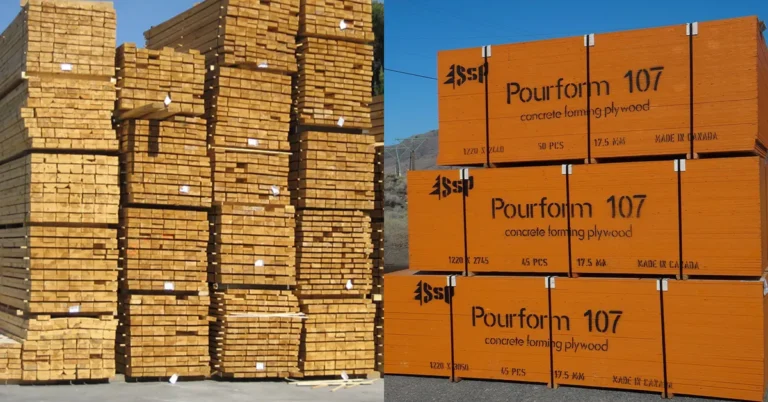
- Formwork plywood – engineered specifically for concrete shuttering, where reuse and a smooth finished concrete surface matter.
- Hardboard – a thinner, denser sheet material worth mentioning alongside plywood. Smooth on one side with a patterned reverse, it is typically used for general construction and floor covering rather than structural work.
Limitations: the trade-off for plywood’s versatility is choice – the wrong grade for the job (using a general purpose panel where you need marine or formwork-grade performance, for example) can mean early failure. It’s usually worth confirming the grade against the application before ordering.
Choosing by project type
Sometimes the quickest way to decide is by the job in front of you rather than the material itself.
Subfloors and structural flooring
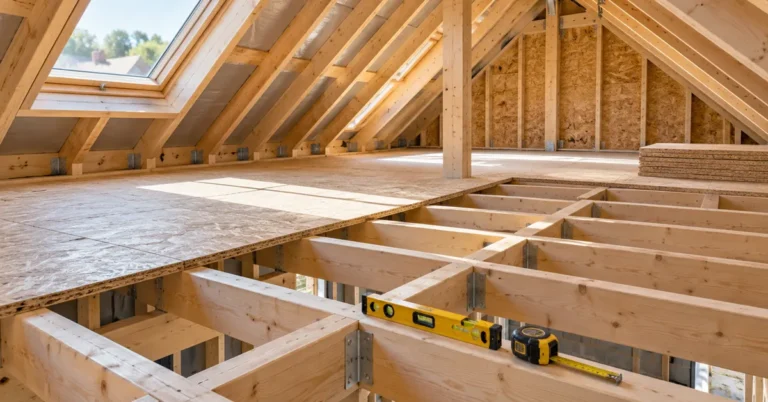
OSB3 is the usual choice for domestic and light-commercial subfloors. It is strong, stable underfoot and cost-effective across a large area.
Plywood is often specified instead where a smoother, more consistent surface is needed under certain floor coverings, or where the project spec calls for it.
Roofing and sheathing
OSB3 is the standard choice for roof decking and wall sheathing, offering structural strength at a lower cost than plywood across large areas.
Cabinetry, shelving and fitted furniture
MDF wins here every time. Its smooth, uniform surface is built for painting, veneering and a clean finished look that neither OSB3 nor standard plywood can match.
Exterior cladding and weathered applications
This is plywood’s territory, and specifically marine-grade plywood where the panel will see sustained wet or weathered conditions, such as boat building or exposed external work.
Concrete formwork
Formwork-grade plywood is purpose-built for this – general construction plywood or OSB3 aren’t a substitute where panel reuse and a smooth finished concrete face are part of the spec.
Cutting, fixing and handling – what to expect
The three materials also behave differently once they’re on the workbench, which is worth knowing before you order.
MDF
MDF cuts cleanly and produces a fine, dense dust that blunts blades faster than solid timber or plywood.
Dust extraction and a respirator are worth having on hand, along with a sharp, fine-tooth blade for a clean edge. It takes screws well but can be prone to splitting near board edges without pre-drilling.
OSB3
OSB3 is tougher on tools than MDF but holds screws and nails securely thanks to its strand structure, making it a reliable choice for structural fixing.
Cut edges are more visibly textured than MDF or plywood, which is one reason it’s rarely used where appearance matters.
Plywood
Plywood generally offers the cleanest cut edge of the three when a sharp blade is used, and its layered structure gives it good screw-holding strength with less splitting risk than MDF.
Edge quality does vary by grade, so a higher-grade panel is worth specifying wherever a cut edge will be visible in the finished job.
MDF vs OSB3 vs plywood at a glance
Still not sure? Talk to our team
If your job sits somewhere between these – or you need a specific grade for a demanding application – our team can talk you through the right board for your spec, budget and timescale.
We stock all of the above products as standard and can source other sizes and species on request.
- Call us on 020 7252 8383
- Email sales@sltimber.co.uk
- Complete the form on our Contact Us